

How to brief a designer so you get what you want

Most bad design outcomes are traced back to the brief, not the designer. Not because the brief was short, but because it answered the wrong questions. A designer does not need to know what colour you like. They need to know what the work has to achieve and how you will judge it.
Here is the structure we ask every client to follow. It fits on one page.
Start with the outcome, not the artefact
The first line of the brief should describe what changes when the project is done. “More enquiries from operations leads at mid-sized manufacturers.” “A brand that a serious investor would take seriously.” “A site the team can update without a developer.”
Not “a five-page website with a blog”. The artefact follows from the outcome. If you start with the artefact, you get the artefact, and it may or may not do anything.
Describe the audience like a person
Write a short paragraph about the one person the work is for. What they are trying to do, what they are worried about, what they have already seen from your competitors, and what would make them trust you. If there are two audiences, write two paragraphs and say which one matters more.
This paragraph will be referenced more than anything else in the brief.
Say what you have
List the assets that exist and their state:
- Logo files (and whether they are real vector files or a JPEG from 2014)
- Photography (professional, phone, or none)
- Copy (final, draft, or “we will write it”)
- Case studies, testimonials, numbers you are allowed to publish
- Existing brand guidelines, if any
A designer scopes very differently depending on this list. Being honest here saves weeks.
Give references, and explain them
Three to five examples of work you admire are useful. Ten are noise. For each, say what specifically you like: the confidence of the type, the way the case studies are laid out, the restraint of the palette. “I like this site” tells a designer nothing. “I like how this site makes a small company feel established” tells them everything.
Include one or two things you do not want, with the same explanation.
Be clear about constraints
Budget, deadline, who signs off, and any hard technical requirements. A designer would rather know the real budget than guess. Ranges are fine. “We do not know” is not.
What to leave out
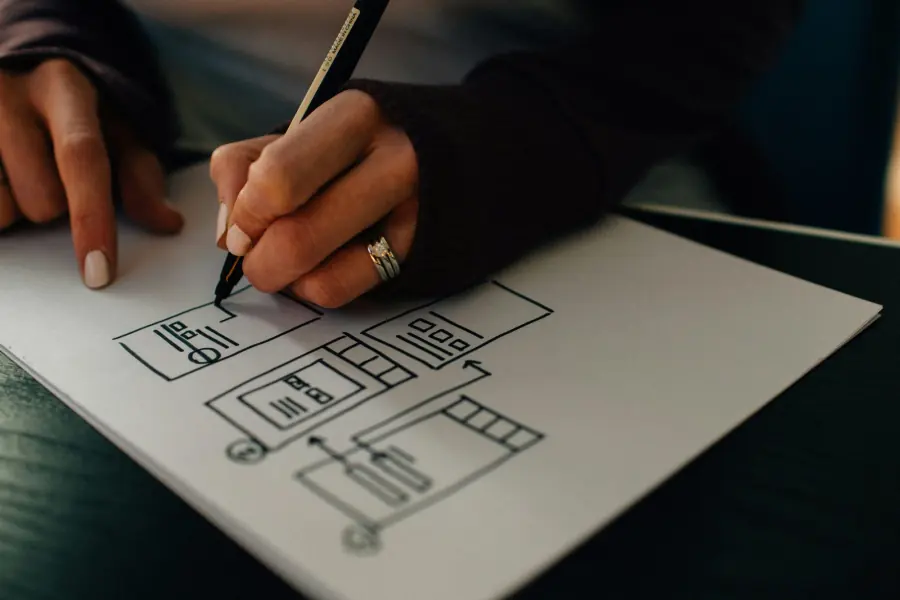
Do not include a layout sketch unless you are a designer. Do not specify fonts and colours unless they are part of an existing brand. Do not list features you saw on another site without saying why they matter to your audience. These things feel helpful and mostly constrain the person you hired to solve the problem.
The one-page version
Outcome, audience, assets, references with reasons, constraints. If you can write those five sections clearly, you will get a first round that is close, and the revisions will be about refinement instead of direction.

Ready to start a project?
Pick a time for a 15-minute call. We’ll look at where your website is today and tell you honestly if we’re the right fit.
Booking for Q4 · 3 spots available
Loading the calendar…